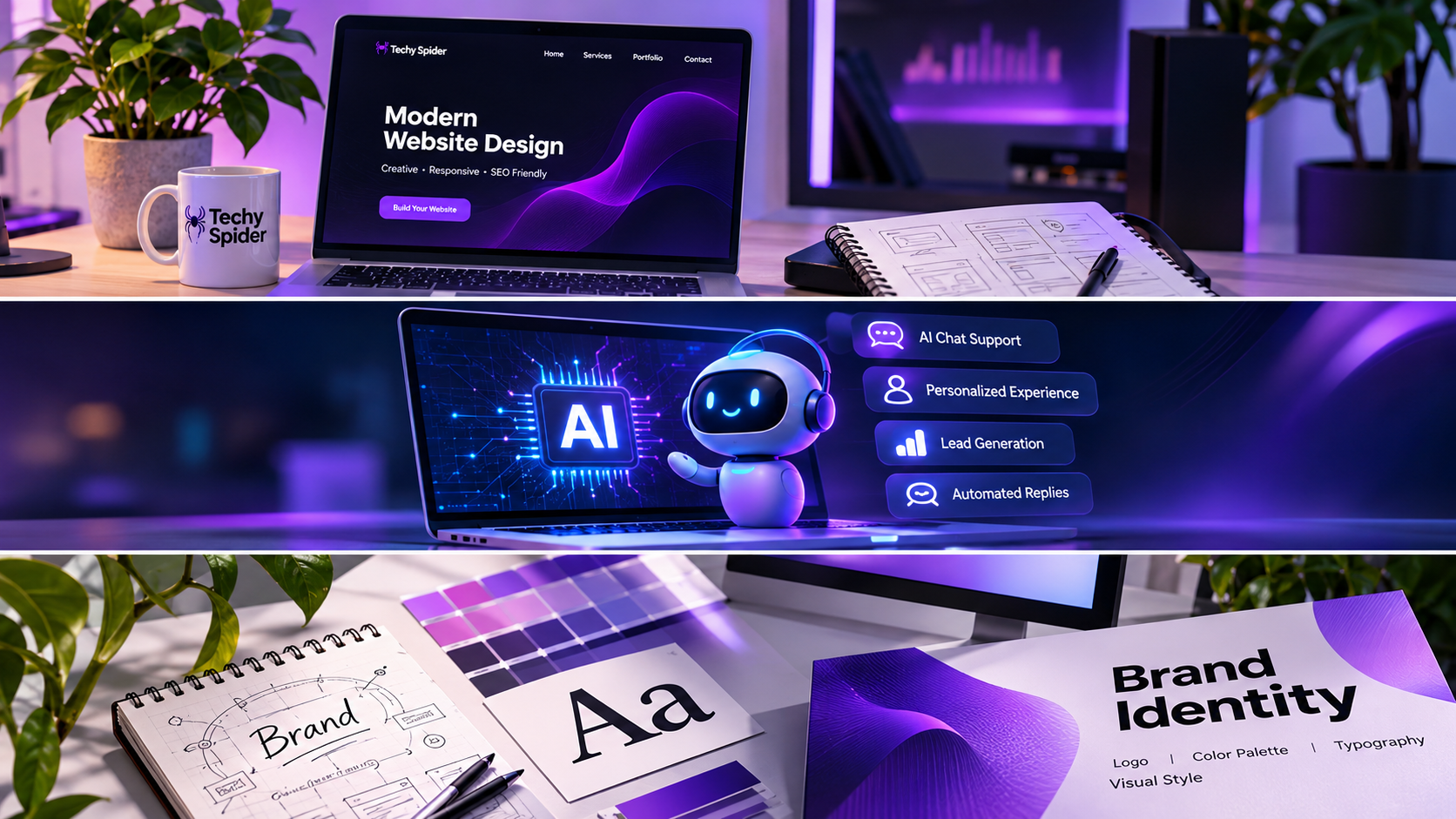
Website Design Trends 2026: How to Build a Website That Grows Your Business
The digital world is evolving faster than ever, and your website is often the first interaction potential customers have with your business. In 2026, having a website is no longer enough. Businesses need websites that look professional, load quickly, provide excellent user experiences and convert visitors into customers.
Whether you run a startup, small business, e-commerce store or established company, investing in modern website design can help you build credibility and create new business opportunities.
At Techy Spider, we believe that a successful website combines creativity, technology, performance and a well-planned digital strategy.
1. Minimalist and Clean Website Design
One of the most important design approaches in 2026 is simplicity. Modern websites are moving towards clean layouts, clear typography, balanced spacing and meaningful visual elements.
Instead of filling every section with unnecessary information, businesses are focusing on presenting the right message at the right time.
A minimalist website helps visitors understand your services, explore your offerings and take action without confusion.
Key elements of minimalist website design:
-
Clean and organized layouts.
-
Modern typography and readable content.
-
Consistent colour combinations.
-
Clear navigation menus.
-
Strategically placed call-to-action buttons.
2. Mobile-First Responsive Design
People access websites from smartphones, tablets, laptops and desktop computers. A website must deliver a consistent experience across all screen sizes.
Mobile-first design means developing the website experience around smaller screens first and then adapting it for larger devices.
A responsive website helps businesses:
-
Provide a better mobile browsing experience.
-
Improve navigation and readability.
-
Make buttons and forms easier to use.
-
Reach customers across different devices.
-
Support search engine visibility.
Google uses the mobile version of website content for indexing, making mobile usability an important consideration for SEO.
3. AI-Powered Website Experiences
Artificial intelligence is creating new opportunities for businesses to improve customer experiences. In 2026, AI-powered tools are becoming increasingly useful for customer support, personalized recommendations and automated interactions.
Businesses can integrate AI-powered features such as:
-
AI chat assistants for customer enquiries.
-
Automated appointment booking.
-
Personalized product recommendations.
-
Intelligent customer support systems.
-
Automated lead qualification.
For example, a service-based business can use an AI chatbot to answer frequently asked questions and help potential customers find the right service.
4. Faster Website Loading and Better Performance
Website speed plays an important role in user experience. Visitors may leave a website if pages take too long to load or important elements do not respond properly.
A high-performing website should focus on:
-
Optimized images in WebP or AVIF formats.
-
Lightweight CSS and JavaScript.
-
Browser caching.
-
Efficient server configuration.
-
Content delivery networks where appropriate.
-
Reduced unnecessary animations and scripts.
Google's Core Web Vitals provide useful measurements for loading performance, interactivity and visual stability.
Improving these areas can create a smoother browsing experience and support your overall SEO strategy.
5. Interactive UI and Micro-Animations
Modern website design is becoming more interactive. Small animations and visual feedback can make a website feel more engaging when they serve a clear purpose.
Examples include:
-
Smooth scrolling transitions.
-
Animated service cards.
-
Button hover effects.
-
Interactive portfolio galleries.
-
Subtle loading animations.
-
Scroll-triggered visual elements.
However, animations should be used carefully. Too many effects can make a website slower and distract visitors from important information.
6. SEO-Friendly Website Architecture
A beautiful website is valuable, but customers also need to find it through search engines. Search engine optimization should be considered during the website development process rather than added as an afterthought.
An SEO-friendly website should include:
-
Proper heading hierarchy using H1, H2 and H3 tags.
-
Unique page titles and meta descriptions.
-
Descriptive URLs.
-
Optimized images with descriptive alt text.
-
Internal linking between relevant pages.
-
XML sitemap and robots.txt configuration.
-
Mobile-friendly layouts.
-
Secure HTTPS connections.
-
Useful, original and relevant content.
For businesses targeting local customers, local SEO elements such as accurate business information, location-specific service pages and a properly maintained Google Business Profile can also help improve online visibility.
7. Strong Visual Branding and Typography
Your website should communicate your brand identity consistently. Colours, fonts, illustrations, photography and layouts all contribute to how customers perceive your business.
In 2026, many modern websites are using bold typography, carefully selected colour palettes, custom illustrations and high-quality photography to create memorable digital experiences.
A consistent visual identity helps your business look more professional and makes your brand easier to recognize.
8. Conversion-Focused Website Design
The ultimate purpose of a business website is not just to attract visitors. It should encourage visitors to take meaningful actions.
Depending on your business goals, these actions might include:
-
Submitting an enquiry form.
-
Booking a consultation.
-
Requesting a service quotation.
-
Making an online purchase.
-
Contacting your team through WhatsApp.
Use clear calls to action, simple forms, visible contact information and genuine customer testimonials to build trust and make it easier for visitors to become customers.
Why Your Business Needs a Modern Website in 2026
Your website is one of the most important digital assets your business can own. It represents your brand, communicates your services and helps potential customers understand why they should choose you.
A modern website can help your business:
-
Build credibility and customer trust.
-
Generate enquiries and leads.
-
Improve online visibility.
-
Showcase products and services.
-
Reach customers beyond your local market.
-
Support long-term business growth.
Build Your Digital Presence with Techy Spider
At Techy Spider, we help businesses establish and strengthen their online presence through professional website design, web development, search engine optimization and digital marketing solutions.
Whether you need a new business website, an e-commerce platform, a website redesign or a complete digital marketing strategy, our team can help turn your ideas into practical digital experiences.
We focus on creating websites that combine modern design, functionality, performance and business objectives.
Ready to Take Your Business Online?
Let's create a website that represents your brand and supports your business goals.
Contact Techy Spider today to discuss your next digital project.
Website: https://techyspider.com/
Contact: https://techyspider.com/contact