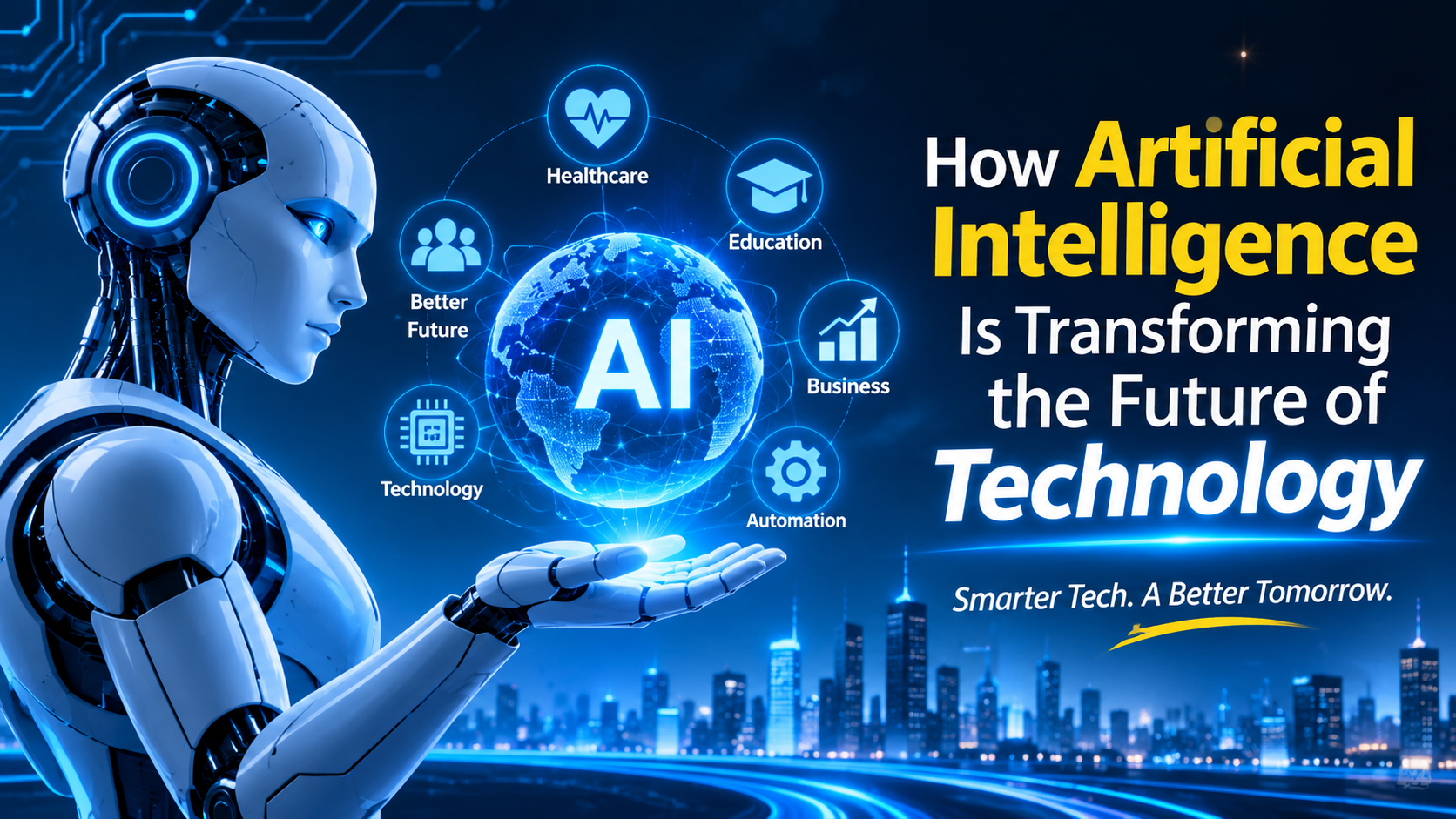
How Artificial Intelligence Is Transforming the Future of Technology
Artificial Intelligence (AI) has become one of the most important technological developments of the modern era. From smartphones and virtual assistants to healthcare, education, and business automation, AI is transforming almost every aspect of our daily lives.
As technology continues to evolve, artificial intelligence is helping businesses become more efficient, improving customer experiences, and creating new opportunities for innovation.
1. What Is Artificial Intelligence?
Artificial Intelligence refers to the ability of computer systems and machines to perform tasks that traditionally require human intelligence.
These tasks include learning, problem-solving, understanding language, recognizing images, and making decisions.
Popular examples of AI-powered technologies include chatbots, voice assistants, recommendation systems, and automated customer support tools.
2. AI in Business and Technology
Businesses worldwide are adopting artificial intelligence to improve their operations and reduce manual work.
Some major applications include:
-
Customer Support: AI chatbots provide instant responses to customer questions.
-
Data Analysis: AI helps businesses analyze large amounts of information.
-
Marketing: AI helps companies understand customer behavior and create targeted campaigns.
-
Automation: Repetitive tasks can be automated to save time and resources.
-
Software Development: AI-powered tools assist developers in writing, testing, and debugging code.
These technologies allow organizations to focus more on innovation and business growth.
3. AI in Healthcare
Artificial intelligence is also creating significant opportunities in healthcare.
AI-powered systems can help medical professionals analyze medical images, identify potential health risks, manage patient records, and support research.
Although AI cannot replace qualified healthcare professionals, it can assist them in making more informed decisions.
4. AI in Education
Education is another industry experiencing rapid technological transformation.
AI-powered learning platforms can provide personalized learning experiences based on individual student needs.
Students can use AI tools to understand complex topics, practice new skills, and improve their productivity.
Teachers can also benefit from automation tools that help with administrative tasks and learning assessments.
5. Benefits of Artificial Intelligence
Some important benefits of AI include:
-
Increased productivity and efficiency.
-
Faster data processing and analysis.
-
Better customer experiences.
-
Reduced repetitive manual tasks.
-
Improved decision-making support.
-
New opportunities for innovation.
However, organizations must use AI responsibly and consider data privacy, security, and accuracy.
6. Challenges and Risks of AI
Despite its advantages, artificial intelligence also presents several challenges.
These include data privacy concerns, cybersecurity risks, inaccurate information, potential job displacement, and ethical issues.
Businesses and governments must establish responsible practices to ensure that AI technologies are developed and used safely.
7. The Future of Artificial Intelligence
The future of artificial intelligence looks promising. As machine learning, automation, and computing technologies continue to advance, AI will become increasingly integrated into everyday activities.
From smarter businesses to personalized digital experiences, artificial intelligence will continue to influence how people interact with technology.
Organizations that understand and responsibly adopt these technologies may gain significant advantages in an increasingly competitive digital world.
Conclusion
Artificial Intelligence is no longer just a concept of the future. It is already transforming industries, businesses, and everyday life.
By understanding its benefits, challenges, and applications, individuals and organizations can prepare themselves for a technology-driven future.
The key is to use AI as a tool for innovation, productivity, and progress while maintaining human judgment and responsibility.